






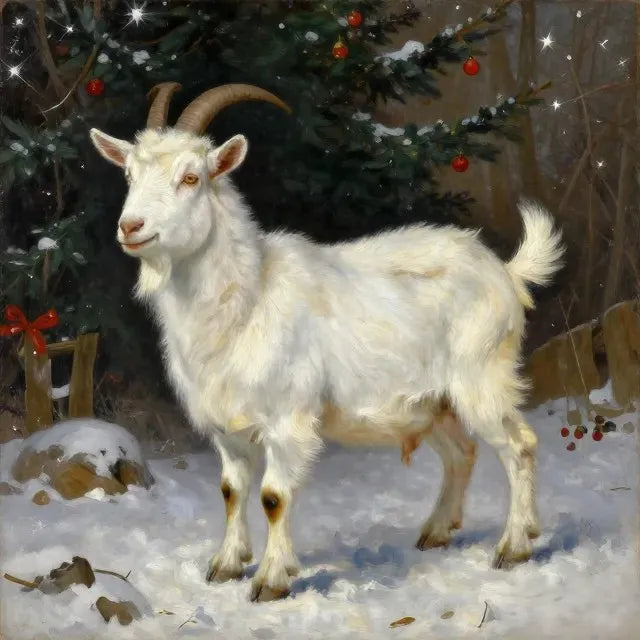
The Yule Goat is an old tradition that has its roots in pre-Christian times.
Originally, the Yule Goat symbolized the return of light during the winter solstice and had strong connections to fertility and harvest. Many of the early traditions surrounding the Yule Goat relate to the pagan god Thor, who was often depicted with a goat-like chariot pulled by goats.
One of the most well-known aspects of the tradition is that the goat would steal Christmas gifts or food, implying that it was a symbol of good harvests and prosperity. In some areas, it was also common for people to dress in goat masks and perform various rituals to scare away evil spirits during the Christmas season.
Over time, the traditions surrounding the Yule Goat evolved.
In Sweden, during the 19th century, the Yule Goat became a symbol of Christmas celebrations, leading to the tradition of creating straw Yule Goats as decorations. These straw goats have become typical Christmas symbols and are often seen in Christmas decorations throughout the country.
Names and Variants of the Gift Giver
Krampus
The tradition of Krampus belongs to Advent, and he is usually portrayed as a devil-like and frightening companion to the kind Saint Nicholas. In Lutheran environments, Krampus is instead the companion of the Christ Child. Krampus is used to scare children into obedience by promising punishments, such as a birch rod, but can also take away children who have not been nice.
Saint Nicholasis celebrated on December 6, when he may leave gifts in the polished shoes that children have placed in the window. He is always invisible and arrives with his gifts during the night. In the morning, children find the gifts and a (often golden) bundle of rice in their shoes. The bundle of rice becomes very large if they have been disobedient.
The figure of Krampus and the Nordic Yule Goat have similarities, but the connections between these two traditions are unclear.
Old Hob: An English variant of the goat figure.
Yule Goat/Yule Buck: A person dressed as a goat with straw, who went from farm to farm to collect gifts or entertain (with, for example, the "slaughter the goat" game).
Santa Claus: The modern, bearded gift giver.
Yule Old Man/Yule Grandfather: Common in Finland.
Yule Buck: Another variant of the gnome figure in the Nordic countries.
St. Nicholas: The original person from whom the tradition of gift-giving originates.
Little Jesus (Kindchen Jesus): The little Christ Child, introduced by Luther as an alternative to St. Nicholas.
Sources supporting these traditions include "Swedish Folklore" by John E. T
Cultural Administration